Image

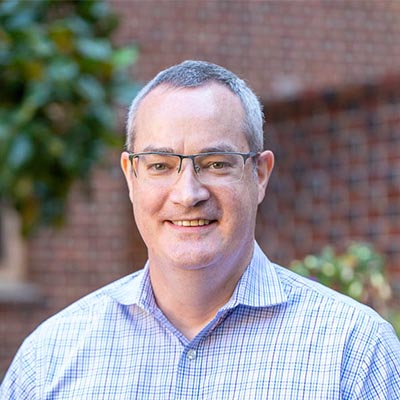
Joe Watabe, MS
CFAR Developmental Core Manager
Spring 2026 funding cycle: Applications available until Monday, March 2nd, 2pm PT.
Amount available: $50,000 in direct costs for 1 year
Apply through the UCSF Resource Allocation Program (RAP) portal
The CFAR Mentored Scientist Award (our primary award program) is a mentoring and training grant targeted toward early stage (either at a senior stage of clinical or postdoctoral training or junior faculty) investigators at UCSF or affiliated partner institutes in the conduct of an HIV research project. These awards are designed to acquire preliminary data and research skills to prepare investigators for a future grant effort. Applicants for this award must indicate a faculty research mentor(s) who will commit to guiding the applicant throughout the duration of the proposed project.
Designation of Mentor
All Mentored award applications from individuals at the Assistant Professor level or below require an HIV research mentor. Mentors can, but are not required to, have supervisory authority over the applicant. CFAR requires your research mentor’s support to advise and guide the research portion of your application before submitting it to RAP.
Of high interest to CFAR are investigations ranging from basic pathogenesis to clinical outcomes in the research areas of HIV/aging and inflammation, latency, cure, vaccines, co-infections, HIV in women, implementation science, and research related to HIV-infected and HIV-impacted Bay Area populations. Projects must be within NIH’s HIV/AIDS research high or medium priority areas. Projects in closely related areas (e.g. TB, HCV, drug use, etc.) must be clearly linked to HIV in order to be eligible for CFAR funding.
The award amount is $50,000 in direct costs for one year.
CFAR requests that applicants review the NIAID HIV Language Guide as they prepare their proposals so that they can follow best practices on language for communicating respectfully about HIV and related topics, including the use of person-first, non-stigmatizing language. Please contact us if you have any questions about this request.
For more detailed information about this RFA, please see the RAP Portal.
To see examples of previously funded projects, see the list below.


In the United States, Latinos are disproportionately impacted by HIV and have high rates of substance use and depression. Untreated substance use and depression often co-occur and are driving poor engagement in HIV care and impeding efforts to eliminate health disparities and the reduction of new infections. This Mentored Scientist Award will support the conduct of original research in the area of substance use and depression fromthe CFAR Network of Integrated Clinical Systems (CNICS) cohort of HIV+ Latinos.
In the United States, Latinos are disproportionately impacted by HIV and have high rates of substance use and depression. Untreated substance use and depression often co-occur and are driving poor engagement in HIV care and impeding efforts to eliminate health disparities and the reduction of new infections. This Mentored Scientist Award will support the conduct of original research in the area of substance use and depression fromthe CFAR Network of Integrated Clinical Systems (CNICS) cohort of HIV+ Latinos.

In the initial days to weeks after infection with HIV, viral RNA enters the central nervous system (CNS) and is thought to form reservoirs in brain tissue that, in the long term, contribute to HIV-associated neurocognitive disorder (HAND) in up to 50% of patients. As patients are usually diagnosed with HIV well after CNS reservoirs have formed, patients with acute HIV (e.g.
In the initial days to weeks after infection with HIV, viral RNA enters the central nervous system (CNS) and is thought to form reservoirs in brain tissue that, in the long term, contribute to HIV-associated neurocognitive disorder (HAND) in up to 50% of patients. As patients are usually diagnosed with HIV well after CNS reservoirs have formed, patients with acute HIV (e.g.
Tuberculosis (TB) is the leading cause of death among adults living with HIV in sub-Saharan Africa. Recent randomized clinical trial data has shown that earlier ART initiation (within two weeks for CD4 <50/µl and within two months for CD4 >50/µl) reduces mortality by 40 to 50%. There is a large gap, however, in the translation of this evidence into real world practice.
Tuberculosis (TB) is the leading cause of death among adults living with HIV in sub-Saharan Africa. Recent randomized clinical trial data has shown that earlier ART initiation (within two weeks for CD4 <50/µl and within two months for CD4 >50/µl) reduces mortality by 40 to 50%. There is a large gap, however, in the translation of this evidence into real world practice.

Malaria remains one of the most formidable infectious diseases worldwide, particularly in sub-Saharan Africa, where it overlaps with the HIV epidemic. For many people in highly endemic areas, malaria parasitemia is asymptomatic, however, parasitemia provides a reservoir of parasites that drives malaria transmission.
Malaria remains one of the most formidable infectious diseases worldwide, particularly in sub-Saharan Africa, where it overlaps with the HIV epidemic. For many people in highly endemic areas, malaria parasitemia is asymptomatic, however, parasitemia provides a reservoir of parasites that drives malaria transmission.